Liquid Sugar in Disguise: The Hidden Glucose Cost of Your 'Healthy' Beverage Routine
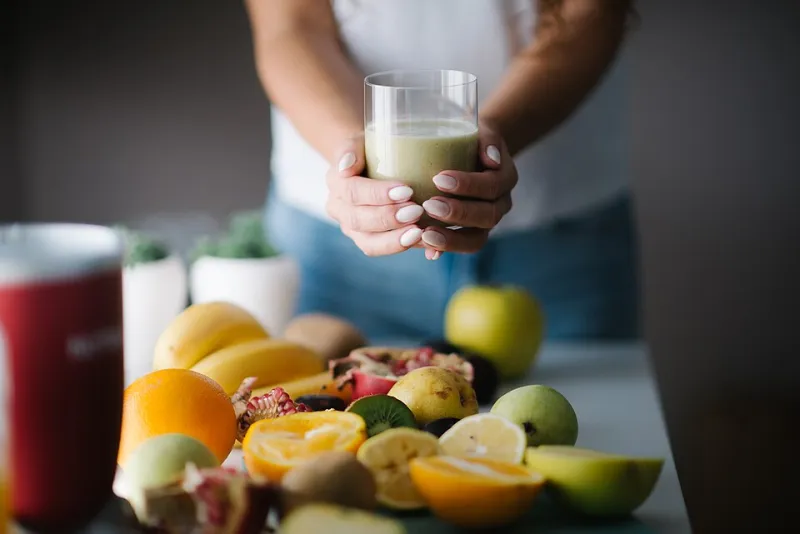
Photo: Shixart1985, CC BY 2.0, via Wikimedia Commons
Walk into any Whole Foods, Trader Joe's, or neighborhood juice bar in America and you will encounter an entire wall of beverages promising vitality, immunity, and metabolic balance. The bottles are beautiful. The labels are confident. The prices suggest that something genuinely premium is happening inside.
But for the millions of Americans working to manage blood sugar—whether they have been diagnosed with prediabetes, type 2 diabetes, or simply want to avoid getting there—many of these drinks represent one of the most deceptive sources of glucose disruption in the modern diet.
This is not a condemnation of healthy hydration. It is an invitation to look more carefully at what "healthy" actually means when it arrives in liquid form.
Why Liquid Carbohydrates Hit Differently
When you eat a whole apple, the fiber in its cell walls slows the rate at which sugar enters your bloodstream. Your digestive system has to work. The process takes time. Glucose rises gradually, and your body's insulin response has a chance to keep pace.
When you drink apple juice—even cold-pressed, no-sugar-added, organic apple juice—that fiber is largely gone. What remains is a concentrated solution of fructose and glucose that your small intestine absorbs with remarkable speed. There is no mechanical chewing, no fibrous matrix to slow transit, and no meaningful delay before that sugar reaches your portal circulation.
Research consistently shows that liquid calories produce a faster, higher glucose spike than their solid-food equivalents, even when the total carbohydrate content is identical. For anyone monitoring their glucose response, this distinction is not a minor footnote—it is the entire story.
The Cold-Pressed Illusion
Cold-pressed juices became a cultural phenomenon in American wellness circles over the past decade, and the marketing has been extraordinarily effective. Words like "raw," "living," and "cold-pressed" signal a kind of nutritional purity that consumers understandably find appealing.
The problem is straightforward: a 16-ounce cold-pressed green juice that contains apple, beet, carrot, and ginger may carry 35 to 50 grams of sugar, depending on the formulation. Even when the greens are genuinely present—spinach, kale, cucumber—they contribute negligible carbohydrate. The sweetness, and the glucose spike, comes almost entirely from the fruit and root vegetables used to make the drink palatable.
For context, a 12-ounce can of Coca-Cola contains approximately 39 grams of sugar. The metabolic arithmetic is uncomfortable but important.
Açaí Bowls: When a Superfood Becomes a Sugar Delivery Vehicle
Açaí itself is a legitimate nutritional asset. The Amazonian berry is rich in anthocyanins, healthy fats, and fiber. In its unsweetened, frozen form, açaí has a relatively modest glycemic impact.
The açaí bowl you order at a café, however, is rarely just açaí. The base is typically blended with banana, sweetened almond milk, honey, or agave—each of which adds rapidly digestible carbohydrates. Then come the toppings: granola, additional banana slices, honey drizzle, and dried fruit. A standard açaí bowl from a popular chain can easily contain 70 to 90 grams of total carbohydrates, with limited protein or fat to moderate the glucose response.
The result is a meal that many Americans eat as a "light, healthy" option, not realizing it may produce a more dramatic blood sugar spike than a stack of pancakes.
Kombucha and the Fermentation Misconception
Kombucha occupies an interesting position in the wellness beverage market. Its association with gut health and fermentation gives it a reputation for being metabolically neutral—or even beneficial. And there is genuine science supporting the value of fermented foods for microbiome health.
However, kombucha is brewed using substantial quantities of sugar, which feeds the fermentation culture. While much of that sugar is consumed during fermentation, the finished product still contains residual sugar—typically between 2 and 12 grams per serving, depending on the brand and how long fermentation was allowed to proceed. Some commercial kombuchas, particularly flavored varieties designed to appeal to mainstream consumers, land closer to 15 grams per bottle.
For most healthy individuals, this is a manageable amount. For someone actively working to stabilize glucose, however, treating kombucha as a "free" beverage without accounting for its carbohydrate content is a common and correctable error.
Plant-Based Protein Shakes: Reading Past the Label
Protein shakes marketed toward plant-based consumers have exploded in popularity, and many of them do deliver meaningful protein from sources like pea, hemp, or brown rice. The challenge is that protein alone does not make a beverage metabolically favorable.
Many commercial plant-based shakes—particularly those sold in ready-to-drink format at grocery chains—are sweetened with cane sugar, brown rice syrup, or fruit juice concentrate to offset the earthy flavor of plant proteins. A single bottle may contain 20 to 30 grams of sugar alongside its 15 to 20 grams of protein. The protein content moderates the glucose spike somewhat, but it does not eliminate it, and the net carbohydrate load still demands an insulin response.
Always read the nutrition facts panel, not just the front-of-package claims. The protein gram count is prominently displayed; the sugar content requires a moment of deliberate attention.
Practical Reformulations That Actually Work
The goal here is not abstinence from beverages you enjoy. It is reformulation—making targeted adjustments that preserve flavor and satisfaction while meaningfully reducing glucose impact.
For smoothies and shakes: Anchor your base with unsweetened almond milk, plain Greek yogurt, or a protein powder that contains fewer than 5 grams of sugar per serving. Use one small serving of low-glycemic fruit—berries are ideal—rather than banana or mango as the primary sweetener. Add a tablespoon of chia seeds, ground flaxseed, or almond butter. The fat and fiber slow absorption substantially.
For juices: Shift from fruit-forward juices toward vegetable-forward blends where greens, cucumber, and celery form the majority of the volume. Add lemon or a small piece of ginger for brightness. If you enjoy the ritual of cold-pressed juice, treat it as a flavor accent—4 ounces alongside a protein-containing meal—rather than a standalone beverage.
For kombucha: Choose brands that list 4 grams of sugar or fewer per serving, and avoid flavored varieties with fruit juice added post-fermentation. Drink it with food rather than on an empty stomach.
For açaí bowls: Request an unsweetened açaí base, skip the granola or replace it with a small amount of chopped nuts, and limit banana to a few slices rather than a full fruit. Add a scoop of plain protein powder to the base if the café permits it.
The Broader Principle
Marketing language is not nutrition science. A beverage can be organic, cold-pressed, locally sourced, and genuinely made with care—and still produce a blood sugar response that works against your metabolic goals. The solution is not cynicism about healthy eating; it is informed reading of what goes into your body and how your body processes it.
Stable blood glucose is not achieved by avoiding pleasure. It is achieved by understanding the mechanisms behind your food and drink choices well enough to make adjustments that are both sustainable and genuinely beneficial. Your afternoon energy, your hunger patterns, and your long-term metabolic health are all shaped by decisions that happen one beverage at a time.